
Managing rentals inside Columbus city limits
RL Property Management manages single-family and small multifamily rentals across Columbus for a flat $117 to $184 per unit per month with a $0 leasing fee. Columbus is Franklin County, so evictions are heard at Franklin County Municipal Court.
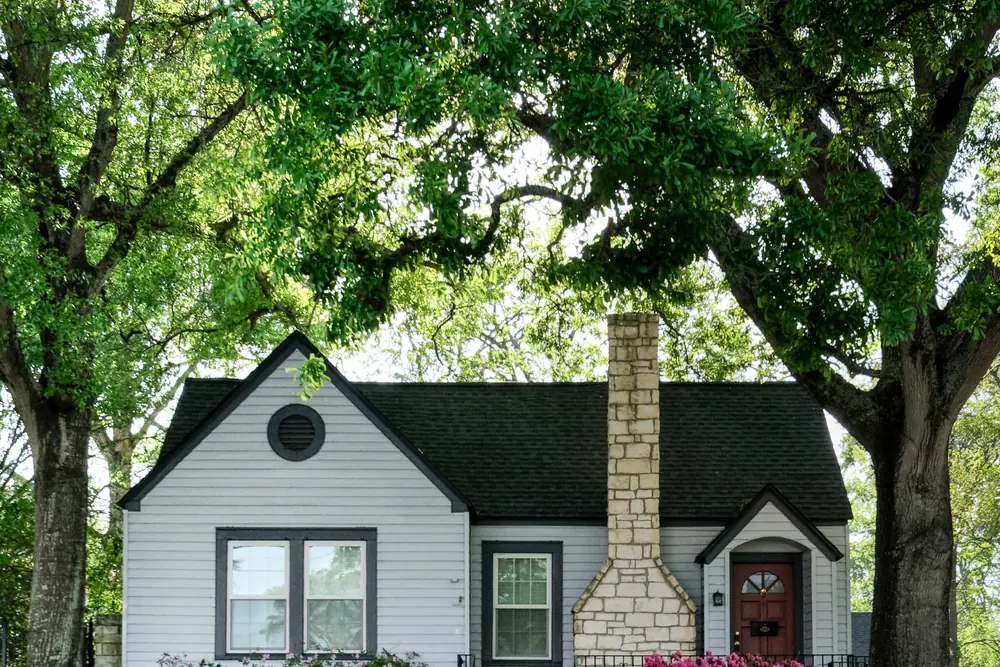
Columbus, the short version
- Median rent across the units we manage in Columbus: 1 bed $966, 2 bed $1,240, 3 bed $1,574, 4 bed $2,107
- Flat $117 to $184 per unit per month, not a percentage of rent
- $0 leasing fee on every plan, every time the unit turns
- Franklin County, so evictions are heard at Franklin County Municipal Court, 375 S. High St.
- Columbus rental registry: $15 per unit per year, capped at $1,500 per complex
- Water and sewer are billed by the city and unpaid charges become a lien on the property
What do Columbus rentals actually rent for?
A two-bedroom runs a median of $1,240 and a three-bedroom $1,574 across the units we manage in Columbus. These are our own leases, not a national estimate and not a listing-price average, which is why they read lower than the asking rents you see on the portals. Asking rent is what a landlord wants. This is what Columbus residents actually signed.
| Bedrooms | Median rent | What that unit usually is in Columbus |
|---|---|---|
| 1 bedroom | $966 | A flat in a double, a converted upper, or a small courtyard building near downtown or campus. |
| 2 bedroom | $1,240 | Half a double, a small post-war house, or a two-bedroom in a four-unit building. |
| 3 bedroom | $1,574 | The workhorse of the Columbus rental market: a single-family house, frame or brick, 1920s through 1970s. |
| 4 bedroom | $2,107 | A larger single-family house, often a Foursquare cut back to single occupancy or a newer build further out. |
Medians across the units RL Property Management manages in Columbus, verified September 2026. Rent varies widely by submarket inside the city. We do not publish neighborhood-level medians because the sample behind them is too small to be honest about.
What does property management cost in Columbus?
A flat $117 to $184 per unit per month, depending on the plan, with a $0 leasing fee and no startup fee on an occupied unit. It is a dollar amount, not a share of your rent, so it does not climb every time you raise the rent.
The gap that matters is not really the percentage. It is the leasing fee. A manager charging half a month to place a resident bills about $787 on a median Columbus three-bedroom, every time that unit turns. We charge nothing for it on any plan, which also means we have no financial reason to prefer a new lease over a renewal.
Which court hears an eviction for a Columbus address?
Franklin County Municipal Court, at 375 S. High St. in downtown Columbus. Ohio Revised Code 1901.02 gives that court jurisdiction throughout Franklin County, so it does not matter whether the property is in Clintonville, in Merion Village or out past Brice Road. Every Columbus eviction is filed in the same building.
An Ohio eviction is a forcible entry and detainer action under Revised Code Chapter 1923. It runs in two causes. The first cause asks the court for possession of the property. The second cause asks for the money judgment, which is unpaid rent and damages. They are heard on different timelines, and an owner who only understands the first cause is often surprised that getting the keys back and getting a judgment are two separate events.
What a Franklin County eviction costs
- $150 to the eviction attorney, filing plus up to two appearances
- $123 to Franklin County for the Eviction Complaint
- $199 to RLPM to run the process
- $80 to the county for tag and setout, only if the resident has not left
- $250 to RLPM for a setout, only if one is needed
- Roughly 3.5% of rentals reach eviction, litigation or another significant dispute
Franklin County Municipal Court also runs an Environmental Division, which the court describes as the only dedicated environmental division in Ohio. That is where housing and building code cases land. It is worth knowing about before a code complaint on your property turns into a court date rather than a letter.
Does Columbus require rental registration?
Yes, since April 2026, and this is the single biggest change to a Columbus owner's compliance burden in years. Columbus City Council enacted Chapter 4515 of the Columbus City Codes on April 20, 2026, creating a registry of residential rental properties administered by the Department of Building and Zoning Services. There are two filings, and owners routinely mix them up.
The city registry, Columbus city limits only
- Annual registration with the Department of Building and Zoning Services
- $15 per unit per year, capped at $1,500 per complex
- A safety inspection of common areas and critical building systems every three years, covered by the registration fee for registrants in good standing
- Civil penalties of $2 per day per unit, with a minimum of $10 per day
- Properties placed in conditional status pay an additional $250 annual inspection fee and may face third-party technical inspection at the owner's expense
Where a city runs its own registration, licence or inspection programme, it stacks on top of the county auditor filing rather than replacing it. Columbus added a citywide registry in April 2026 under City Code Chapter 4515. Keeping track of which programme applies to your address, and filing on time, is work we absorb rather than work we hand you.
The county filing, all of Franklin County
- Required by Ohio Revised Code 5323.02 in any Ohio county over 200,000 people
- Filed with the Franklin County Auditor
- Owner name, address and telephone number, plus a responsible officer or member if the owner is an entity
- One time, no fee, updated within 60 days of any change
- An owner living outside Ohio must designate an Ohio resident as agent for service of process
This one has existed for years and is widely ignored. It takes ten minutes.
Neither filing applies to a property that only carries a Columbus mailing address. Central Ohio is full of parcels that mail as Columbus but sit in another municipality or in an unincorporated township. The Franklin County Auditor parcel record settles which taxing and zoning jurisdiction a property is actually in, and that is what decides whether Chapter 4515 applies.
Who provides utilities in Columbus, and who pays?
Four different providers, and the split of who pays is not the same for all of them. This is the part of a Columbus pro forma that out-of-state buyers get wrong most often.
| Utility | Provider | Who customarily pays |
|---|---|---|
| Water, sewer, stormwater | City of Columbus Department of Public Utilities | Resident, through a city Tenant Billing Agreement. The owner stays liable. See below. |
| Electric | AEP Ohio, with Columbus Division of Power in some corridors | Resident, in the resident name. |
| Natural gas | Columbia Gas of Ohio | Resident, in the resident name. |
| Trash and recycling | Columbus Division of Refuse Collection | City collection, no separate bill, for buildings of 4 attached units or fewer. Five units and up, the owner contracts a private hauler. |
The water bill is the owner's problem, whoever's name is on it
Columbus City Code 1105.045 is titled "Unpaid charges a lien. Owner liable." Section 1147.16 does the same job for sewer. The owner of the premises is liable for water and sewer charges incurred at that address, and unpaid charges attach to the property itself, which means they reappear at sale or refinance whether or not the resident who ran them up is findable.
A Tenant Billing Agreement, which is the city form that puts the bill in the resident name, moves the paper. It does not move the liability. So we treat a water balance as an owner exposure rather than a resident problem: the city publishes a delinquent charge lookup by address, we check it at every turn, and we do not hand a unit back to the market with a balance quietly compounding on it.
What kind of rental housing does Columbus have?
Mostly detached houses and small buildings, built in four distinct waves, and the wave a property comes from predicts its maintenance bill better than anything else on the listing.
Pre-1900 brick, close in
German Village, Olde Towne East, parts of Italian Village and the near South Side. Brick, slate or replaced slate, plaster over lath, original window openings, and often a stone or brick foundation. Beautiful, rentable at the top of the market, and unforgiving about deferred maintenance.
1900 to 1940 frame and Foursquare
Clintonville, Olde Towne East, Merion Village and the near south side. Foursquares, bungalows, and a great many doubles. Knob and tube that was mostly but not always replaced, galvanized supply lines, and the original wood windows on maybe half of them.
Post-war capes and ranches
North Clintonville, Beechwold, Northland, the near west side. Small, efficient, cheap to turn, and the most reliable cash flow in the city. This is where the median Columbus rental sits.
1960s onward subdivisions
Brice and Eastland, the Sawmill corridor, the far south. Split-levels, ranches, later townhomes and condos. Bigger, newer systems, higher rent, and an HOA to read before you buy.
Three Columbus neighborhoods sit inside historic architectural review districts, where the German Village, Italian Village and Victorian Village commissions issue Certificates of Appropriateness for exterior alterations under Columbus City Code chapters 3116 and 3119. If you own in one of those, a roof, a window replacement or a porch repair is a permitting question before it is a contractor question, and the timelines are measured in months.
Which Columbus neighborhoods do we work in?
Most of the city. Three of them have their own page, because their housing stock and their rules are different enough from the rest of Columbus that a general answer would be wrong.
- Clintonville Bungalows, Cape Cods and Foursquares from the 1920s through the 1950s, along High Street from North Broadway up to Morse Road. Read the Clintonville page
- German Village A 233-acre National Historic Landmark of brick cottages and Dutch Doubles south of downtown, with design review on every exterior change. Read the German Village page
- Short North The High Street corridor between downtown and campus, flanked by Victorian Village and Italian Village. The highest rents in the city portfolio. Read the Short North page
-
Olde Towne East
Large late-Victorian houses east of downtown, many cut into doubles and triples decades ago.
-
Merion Village and the South Side
Compact frame and brick houses just south of German Village, along Parsons and South High.
-
Beechwold
North of Clintonville proper, with the winding streets and Tudor and Cape Cod stock around Old Beechwold.
-
Northwest and Sawmill
Late-century condos, townhomes and ranches near the Sawmill corridor and Dublin-Granville Road.
-
Brice and Eastland
Post-war and 1970s subdivisions on the far east side, near Brice Road and I-70.
-
West Columbus and Lincoln Village
Frame houses and doubles west of the Scioto, along West Broad Street and out toward Lincoln Village.
-
Northland
Ranches and split-levels off Morse Road and Karl Road, built in the 1960s and 1970s.
There are a small number of Columbus submarkets we do not take on new business in. That is a judgment about where we can run a property well, not a comment on the neighborhood. Give us the address and we will tell you plainly, before you spend time on a quote.
Can a Columbus landlord refuse a housing voucher?
No. Columbus adopted source of income protection in March 2021, effective that July. It is unlawful inside the city to refuse an applicant, or to change the price, terms, conditions or fees, because part of the rent will be paid by a Housing Choice Voucher, child support, spousal support or public assistance. A violation is a first-degree misdemeanor.
The practical trap is the income multiple. If your criteria require income of three times the rent, the voucher portion is subtracted before the test runs. On a $1,500 rent where a voucher covers $900, the multiple applies to the $600 the resident actually pays, not to the full $1,500. Applying it to the full rent screens out voucher holders by arithmetic, which is exactly what the ordinance prohibits. Everything else in a screening standard still applies, and it has to apply identically to every applicant.
What does management actually cover in Columbus?
Everything between listing the unit and sending you the money, on every plan. The plans differ in one thing only: how much repair spending we handle without calling you first.
- Marketing and leasing Listing syndication to every major rental portal, self-guided and agent-led showings, and pricing set against our own Columbus portfolio data rather than a national estimate.
- Resident screening Credit, criminal, income, rental history and eviction checks, applied identically to every applicant and inside both federal fair housing law and the Columbus source of income ordinance.
- Maintenance In-house technicians at $84 an hour plus a $15 trip charge with materials at cost, vetted vendors for specialty work, and 24/7 emergency coverage.
- Rent collection Online payment, automated late notices after the 5th, and owner direct deposit on the 10th of each month.
Rent is due on the 1st. In practice most residents pay between the 1st and the 5th, and late fees are assessed after the 5th. Owner funds go out on the 10th and take about 2 to 3 business days to appear in your account. Across the portfolio, 96% of rent is collected by the 5th.
For the full owner-side walkthrough of services, onboarding and reporting, see what we do for Columbus owners. This page is the local reference. That one is the process.
Columbus property management questions
How much does property management cost in Columbus, Ohio?
RL Property Management charges a flat $117 to $184 per unit per month depending on the plan, with a $0 leasing fee and no startup fee on an occupied unit. It is a fixed dollar amount, so it does not rise when your rent rises. Most Columbus managers charge 8% to 10% of collected rent plus roughly half a month of rent to place each resident.
Does Columbus require landlords to register rental property?
Yes. Columbus City Council enacted Chapter 4515 of the Columbus City Codes on April 20, 2026, creating an annual registry of residential rental properties administered by the Department of Building and Zoning Services. Registration is $15 per unit per year, capped at $1,500 per complex, and it covers a safety inspection of common areas and critical building systems every three years at no extra charge for registrants in good standing. Separately, Ohio Revised Code 5323.02 requires a one-time, no-fee filing with the Franklin County Auditor.
Which court hears an eviction for a Columbus address?
Franklin County Municipal Court, at 375 S. High St. in Columbus. Ohio Revised Code 1901.02 gives that court jurisdiction throughout Franklin County, so every Columbus address goes there regardless of which side of town it sits on. An eviction is filed as a forcible entry and detainer action under Revised Code Chapter 1923. Franklin County Municipal Court also runs the only dedicated Environmental Division in Ohio, which is where housing code cases are heard.
Who provides utilities in Columbus, and who pays for them?
Water, sewer and stormwater are billed by the City of Columbus Department of Public Utilities. Natural gas is Columbia Gas of Ohio. Electric is AEP Ohio for most of the city, with the municipal Columbus Division of Power serving certain corridors and pockets. In our leases the resident pays gas and electric directly. Water and sewer can be put in the resident name through the city Tenant Billing Agreement, but read the next answer before you assume that transfers the risk.
If my Columbus tenant does not pay the water bill, am I liable?
Yes. Columbus City Code 1105.045 is titled "Unpaid charges a lien. Owner liable." Section 1147.16 does the same for sewer. The owner of the premises is liable for water and sewer charges at that address, and unpaid charges attach to the property, which means they surface at sale or refinance. A Tenant Billing Agreement moves the paper bill to the resident. It does not move the ultimate liability off the owner. We check the city delinquent charge lookup at every turn so a balance does not sit and compound.
Does the city pick up trash at my rental?
Only for buildings of 4 attached units or fewer. The Columbus Division of Refuse Collection services single-family homes and small buildings at no separate charge. A building of five units or more has to contract a private hauler, and that cost belongs in the pro forma before you buy. It is the single most commonly missed line item on a small Columbus multifamily deal.
Can I refuse a Housing Choice Voucher in Columbus?
No. Columbus adopted source of income protection in March 2021, effective that July, making it unlawful to refuse an applicant or change the terms because part of the rent will be paid by a Housing Choice Voucher, child support, spousal support or public assistance. A violation is a first-degree misdemeanor. If you apply an income multiple such as three times the rent, the voucher portion is subtracted first, so the test runs against the share the resident actually pays. Screening criteria still apply, and they have to apply the same way to every applicant.
Do you manage in every Columbus neighborhood?
RL Property Management manages single-family homes and small multifamily properties across most of the city, from Clintonville and Beechwold in the north to Merion Village and the South Side, out to Brice and Eastland on the east and the Sawmill corridor on the northwest. There are a small number of Columbus submarkets we do not take on new business in. Tell us the address and we will tell you plainly whether it is one of them.
General information about property management practice in Central Ohio, not legal advice. Statutes and local ordinances change, and your own situation may differ.
Last verified September 2026. Reviewed by Peter Lohmann, Principal Broker and CEO.
Where to go next
- ClintonvilleBungalows and Cape Cods along High Street, north of campus.
- German VillageA National Historic Landmark with design review on every exterior change.
- Short NorthThe High Street corridor, Victorian Village and Italian Village.
- PricingFlat $117 to $184 per unit per month, published in full.
- All areas we serveEvery Central Ohio community, grouped by county.

See what your Columbus rental should earn
Send us the address. You get a rent number priced against our own Columbus leases, a read on the registry obligation, and a plain answer about what the property needs before it lists.